We plan to start filming on Monday the 15th of Feb to the 22nd. We want to do as much filming as we can in Half term when everyone isnt very busy with school and we have the whole days to film.
We will also have lots of time to plan how and where we wanted to.
Wednesday, 27 January 2010

Animatic Storyboard
Well after seeing Jonny's storyboards that he uploaded, I thought it would be a good idea to create an animatic version of the storyboard. This will enable us to have a rough idea of the length that our opening scene will be. As you can see from the video below it currently lasts approx. 1min 50seconds, I think once we have started filming we may have to add a few shots in to make it slightly longer. I don't think we will need to cut out any parts as it will not be longer than the specified 2minutes. I have included within the 1min 50seconds our film title (Pursuer), a picture of our film institution logo, and whos is starring in our film.
UPDATE: When we got around to filming Pursuer we realised that we had far too many shots in our storyboard so we cut out quite a few shots to enable us to fit in the whole plot. We changed a few of the angles etc. so that they would suit the genre of our film. Our final film is now 2min 4seconds. We went over our specified time by 4seconds however we have been informed that there was a 5second leeway.
UPDATE: When we got around to filming Pursuer we realised that we had far too many shots in our storyboard so we cut out quite a few shots to enable us to fit in the whole plot. We changed a few of the angles etc. so that they would suit the genre of our film. Our final film is now 2min 4seconds. We went over our specified time by 4seconds however we have been informed that there was a 5second leeway.
Film Institutions Research
For film institutions research I investigated Film4 and Pathe Pictures in a bit more detail than I already knew. Here is what I found out:
Film4 Productions is a British and it is a film production company that is owned and operated by Channel 4. Film4 has been responsible for the huge succeses such as Slumdog Millionaire, Four weddings and a Funeral, Brϋno, and East is East. I think the reason for such success is because most of the actors are British and also where the films are set is also British. I have researched Film4 because they mostly produce low budget films and they produce a variety of genres. So I think this will be a good production company to feature in the opening titles to our film as it has quite a good reputation and although it is less well known compared to Warner Brothers or Fox I think it will still do well and it os one of the best for our type of film production.
Pathe Pictures has a major presence within the UK film industry, operating as a fully integrated studio. It is involved in all aspects of film-making, from production and development through to international sales and distribution. Pathe UK's production range from Aardman's 'Chicken Run' to Stephen Frears 'The Queen' to Danny Boyle's box office hit 'Slumdog Millionaire'.
Film4 Productions is a British and it is a film production company that is owned and operated by Channel 4. Film4 has been responsible for the huge succeses such as Slumdog Millionaire, Four weddings and a Funeral, Brϋno, and East is East. I think the reason for such success is because most of the actors are British and also where the films are set is also British. I have researched Film4 because they mostly produce low budget films and they produce a variety of genres. So I think this will be a good production company to feature in the opening titles to our film as it has quite a good reputation and although it is less well known compared to Warner Brothers or Fox I think it will still do well and it os one of the best for our type of film production.
Pathe Pictures has a major presence within the UK film industry, operating as a fully integrated studio. It is involved in all aspects of film-making, from production and development through to international sales and distribution. Pathe UK's production range from Aardman's 'Chicken Run' to Stephen Frears 'The Queen' to Danny Boyle's box office hit 'Slumdog Millionaire'.


Pursuer Storyboard
This is our main idea for the 2 minute film called 'Pursuer'.
Page 1

Page 2

Page 3

Page 4

All these scenes should hopfully be in the 2 minute limit that is asked for.
Page 1

Page 2

Page 3

Page 4

All these scenes should hopfully be in the 2 minute limit that is asked for.
Monday, 25 January 2010
Costume Ideas
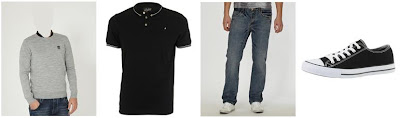
Paul's 'preppy' look:
'UNKNOWN' characters dark mysterious look:
Recently I have been thinking of what we want our characters to wear, so I have got a few pictures of the type of clothing the actors may be wearing.
For Paul as he is a college student he is going to have a 'preppy' sort of look. He will be wearing the clothes he wears at college such as polo shirt, jumper, jeans, and plimsolls.
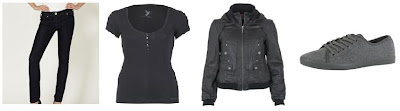
Now for the 'UNKNOWN' character they will have to wear dark clothing to seem more mysteriour and unknown. Colours such as black and dark grey, we dont really want to be able to see their face when we are filming so I thought maybe black/dark grey trousers, black/dark grey top, a black jacket with their hood up, and black plimsolls/pumps.
The colours for Paul do not really matter, he doesn't want very bright colours as this does not represent the character and he does not want too dark colours as this will counteract with the 'UNKNOWN' characters clothing. We want to be able to have a clear contrast between the two characters.

'UNKNOWN' characters dark mysterious look:

Recently I have been thinking of what we want our characters to wear, so I have got a few pictures of the type of clothing the actors may be wearing.
For Paul as he is a college student he is going to have a 'preppy' sort of look. He will be wearing the clothes he wears at college such as polo shirt, jumper, jeans, and plimsolls.
Now for the 'UNKNOWN' character they will have to wear dark clothing to seem more mysteriour and unknown. Colours such as black and dark grey, we dont really want to be able to see their face when we are filming so I thought maybe black/dark grey trousers, black/dark grey top, a black jacket with their hood up, and black plimsolls/pumps.
The colours for Paul do not really matter, he doesn't want very bright colours as this does not represent the character and he does not want too dark colours as this will counteract with the 'UNKNOWN' characters clothing. We want to be able to have a clear contrast between the two characters.
Wednesday, 20 January 2010
Pursuer Vs. Blood Red
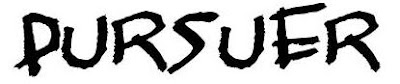
Well this evening we finally thought of a name for our film with a little help from our friends, we both shortlisted it down to one name each. Jonny's name was Blood Red and mine was Pursuer. I chose the name Pursuer becuase it is when you follow something in an effort to capture it, and can mean being taunted or afflicted. Jonny chose his because he thought it sounded very rough and violent. He thought it would go with the theme for our movie which is horror. So we posted the two names on the social networking site Facebook and asked friends to comment on it saying which name they prefered for the type of film we are creating. The chosen name was Pursuer as it recieved more votes than Blood Red. Although i still think Blood Red was a very good suggestion by Jonny. So thank you guys for helping us, it was very useful.

The Shot List
These are the shots that i think should be in our film. They will mainly be closeups or medium shots because of the genre of film. This makes the mood much more mysterious.
First Shot: This will be an establishing shot of the school and the student coming from it towards the camera.
Second Shot: Either mid shot or long shot to show where the person is going.
Third Shot: This will be a mid shot but at one side of the person as they go by. This shot wont show their face but will have their legs to chest so not to see their face. The Unknown character will then make themselves apparent in the scene but going down the same path as the Victim.
Fourth Shot: This will be a shot of the person going up the stairs on the bridge. And will have an establishing shot of the person walking down the bridge. With maybe a zoom of the Unknown person behind a bush or tree. Their will then be a low angle shot of the person going across the bridge and walk down the stairs on the other side of the bridge to continue walking. Again, hinting that the person in black is following them.
Fifth Shot: As they are walking down the dark road with overhanging trees the angle will be a tracking shot and then a medium shot of him looking round behind him, to see nothing.
Sixth Shot: This will be an establishing shot of the person going towards their house getting their keys out and stopping at the door. There would be a extreme close up of the man fiddling with their keys in their hand about to open the door.
Seven: This will be a mid shot of the person coming though the door (Maybe pick up post) and will follow them towards the computer which they will turn on and show a message from an Unknown person. This message will say 'I'm Watching You So Keep Your Eyes Open'
This person will then pick up the phone and while they are on the phone the camera will arc around to the window where the Unknown person will be standing!
First Shot: This will be an establishing shot of the school and the student coming from it towards the camera.
Second Shot: Either mid shot or long shot to show where the person is going.
Third Shot: This will be a mid shot but at one side of the person as they go by. This shot wont show their face but will have their legs to chest so not to see their face. The Unknown character will then make themselves apparent in the scene but going down the same path as the Victim.
Fourth Shot: This will be a shot of the person going up the stairs on the bridge. And will have an establishing shot of the person walking down the bridge. With maybe a zoom of the Unknown person behind a bush or tree. Their will then be a low angle shot of the person going across the bridge and walk down the stairs on the other side of the bridge to continue walking. Again, hinting that the person in black is following them.
Fifth Shot: As they are walking down the dark road with overhanging trees the angle will be a tracking shot and then a medium shot of him looking round behind him, to see nothing.
Sixth Shot: This will be an establishing shot of the person going towards their house getting their keys out and stopping at the door. There would be a extreme close up of the man fiddling with their keys in their hand about to open the door.
Seven: This will be a mid shot of the person coming though the door (Maybe pick up post) and will follow them towards the computer which they will turn on and show a message from an Unknown person. This message will say 'I'm Watching You So Keep Your Eyes Open'
This person will then pick up the phone and while they are on the phone the camera will arc around to the window where the Unknown person will be standing!
Tuesday, 19 January 2010
Character Profiles

So today our final cast has been selected and here are the character profiles. We have asked two friends, Charlie Surey and Alana Shaw to participate in out movie. Alana agreed as we will be/have been helping her group with acting, filming and whatever else they need us to do. Charlie is going to be the college student, his name for the purpose of the movie will be Paul Smith. He is a normal guy with a normal lifestyle he gets on with his college work and goes out with his mates regularly. For the movie Charlie (Paul) will be wearing 'normal' college clothes such as jeans, plimsolls a polo shirt and a jacket. Alana will be playing the 'UNKNOWN' person, the name and identity of this person will not be revealed throughout the movie. This creates tension and suspense for the audience. Alana who throughout the project we will refer to as 'UNKNOWN' will be wearing black clothing and black hooded top with the hood up. We are goiong to try not to show much of 'UNKNOWNS' face during filming.
Monday, 18 January 2010
Places for Filming
We had to give it a little thought but now we have just about decided on where we will have most of the film taken. We will have to think about the weather at the time. For our film most of the film the weather will have to be quite dark and grey. It will look odd if we have one of our scenes with the sun out and it is nice and warm compared to the other darker scenes.
Final Filming Arrangements
Today me and Jonny are thinking about the final arrangements for the filming of our opening. We are in the middle of deciding whether or not to film just our main character walking out of the school gates or the main character with the rest of the school. We are thinking that if we do him on his own it will be more mysterious and creepy. However if we do it with the whole of the school leaving we will have to gain permission from the school and everyone who will be filmed, this will be very time consuming and it will take up valuable filming time.
Friday, 15 January 2010
Monday, 4 January 2010
For more effect...
We will have to film on a day when it rains or when it is cloudy to make the scene look darker and to make the main character look more in danger.Only the first one or two shots will be near the school and after this all the shots are outside and because of this we will have to organise times to film. The places we have decided to film are very dark and mysterious and because of this we need to film them so that they match the genre we are trying to give to the audience. Adding the music in editing will the give the camera shots and angles an extra touch to the scene and make it that extra bit creepy.
Wednesday, 16 December 2009
Planning and Research
Planning and research list (Once highlighted bold it means it is completed)
- Google (G321 OCR blog) for example blogs
- Story board of our plot
- Mind maps – location, genre, costumes, ideas
- Photos of props
- Location photos
- Photos of clothing
- Photos of actors
- Music for our opening
- PowerPoint presentation for Planning and research
- Script (if any - probably no dialogue though)
- Google (G321 OCR blog) for example blogs
- Story board of our plot
- Mind maps – location, genre, costumes, ideas
- Photos of props
- Location photos
- Photos of clothing
- Photos of actors
- Music for our opening
- PowerPoint presentation for Planning and research
- Script (if any - probably no dialogue though)
Monday, 14 December 2009
Ideas for Camera Shots/Angles
These are a few shots and angles that we could use in our 2 minute film.
I liked the tilt shots because they make the audience want to watch what may come up and it creates tension.
Sunday, 6 December 2009
Questionnaire's
Media Studies - Research Questionnaire
The main purpose of producing this questionnaire is to distribute it to round 30 people within different age ranges and social groups to get there opinion on film openings and other important things to do with an opening scene. This will give me an idea as to what genre we want to do and what we want to happen in our opening. Once the results have been collated I will post them on our blog and comment on each question in high detail as to the response given.
Questionnaire:
1. What is your age?
2. What is your sex?
3. What is your favourite genre film to watch?
4. What do you like to see most appear in a movie (E.g. fighting, arguing, romance etc.)?
5. What encourages you to go to the cinema and watch a film?
6. What is so important about the opening two minutes to a film?
7. Do you enjoy the beginning of a film when you watch it?
8. Would you like to watch a film whereby it starts at the end (E.g. recapping over a particular story)?
9. How often do you watch your favourite genre of film?
10. How often do you watch films?
The main purpose of producing this questionnaire is to distribute it to round 30 people within different age ranges and social groups to get there opinion on film openings and other important things to do with an opening scene. This will give me an idea as to what genre we want to do and what we want to happen in our opening. Once the results have been collated I will post them on our blog and comment on each question in high detail as to the response given.
Questionnaire:
1. What is your age?
2. What is your sex?
3. What is your favourite genre film to watch?
4. What do you like to see most appear in a movie (E.g. fighting, arguing, romance etc.)?
5. What encourages you to go to the cinema and watch a film?
6. What is so important about the opening two minutes to a film?
7. Do you enjoy the beginning of a film when you watch it?
8. Would you like to watch a film whereby it starts at the end (E.g. recapping over a particular story)?
9. How often do you watch your favourite genre of film?
10. How often do you watch films?
Wednesday, 2 December 2009
Ideas From Genres of Films
We looked at different genres of film to help us get ideas on how to make our films appear more realistic to the genre that we have chosen. The first genre we looked at was types of gangster film including Kidulthood, Get Carter and Good Fellas.
Kidulthood is a more modern film compared to the other two and has non-diagetic sound of a drum and bass track which appeals to the audience but also shows the mood of the scene. The way that it is edited shows all the main characters and flashes past the people who are more in the back round of the film. This tells the audience that the film will be very fast paced.
The next gangsta film is Get Carter. This is much more sutle and starts with a very slow fade in and a slow zoom. The sound is very quite and creates tension in the scene. There is hardly any dialog in the first 2 minutes of the film and it is only the projector that is amplified so that the audience concentrates in it.
The last gangster film we watched was the beginning of Good Fellas. The titles at the beginning are very plain and simple but the main title with the name of the film on it is in red which relates to blood. The voice - over is an American person and 50s music to try and set the scene.
The two musicals we watched were Hairspray, High School Musical and Grease
Hairspray used blue bubble writing that appeared out of the haze of the spray. The music is very happy and upbeat. The film has sounds of older bikes to set a 60s scene. Old cars and old shops are used to make the film more believable.
High School Musical begins with white titles to show what time of year it is. (In this case white)
The lighting is used to introduce the two main characters.
The music in Grease is slow and romantic to show the genre of the film. It also has cartoon writing to show who it might appeal to.
The last genre we watched was the Horror genre. These included Saw2, Scream and The Village.
Saw's opening scene was very good at creating atmosphere and uses lighting, camera shot/angles and sound to make the audience feel scared.
The light was very dark and only showed a light bulb on its own showing that the person in the scene is on his own by the way that the camera looks around and the breathing that is coming from behind the camera.
Scream's titles are very good showing the title of the film in white then a scream and a knife slash can be heard. The title then goes red representing blood. There were many close ups on things that didn't appear very special in the film. The camera keeps following the girl showing that something might happen to her later on in the scene.
The titles in 'The Village' were in a very Gothic font showing that the film may be set in the past or in a distant place. High pitched music is used a lot and the only thing seen in the beginning of the film is the dark trees of a wood.
Using the things we have seen in the 3 horror films we can try and apply these techniques in our short film to try and make it better.
Kidulthood is a more modern film compared to the other two and has non-diagetic sound of a drum and bass track which appeals to the audience but also shows the mood of the scene. The way that it is edited shows all the main characters and flashes past the people who are more in the back round of the film. This tells the audience that the film will be very fast paced.
The next gangsta film is Get Carter. This is much more sutle and starts with a very slow fade in and a slow zoom. The sound is very quite and creates tension in the scene. There is hardly any dialog in the first 2 minutes of the film and it is only the projector that is amplified so that the audience concentrates in it.
The last gangster film we watched was the beginning of Good Fellas. The titles at the beginning are very plain and simple but the main title with the name of the film on it is in red which relates to blood. The voice - over is an American person and 50s music to try and set the scene.
The two musicals we watched were Hairspray, High School Musical and Grease
Hairspray used blue bubble writing that appeared out of the haze of the spray. The music is very happy and upbeat. The film has sounds of older bikes to set a 60s scene. Old cars and old shops are used to make the film more believable.
High School Musical begins with white titles to show what time of year it is. (In this case white)
The lighting is used to introduce the two main characters.
The music in Grease is slow and romantic to show the genre of the film. It also has cartoon writing to show who it might appeal to.
The last genre we watched was the Horror genre. These included Saw2, Scream and The Village.
Saw's opening scene was very good at creating atmosphere and uses lighting, camera shot/angles and sound to make the audience feel scared.
The light was very dark and only showed a light bulb on its own showing that the person in the scene is on his own by the way that the camera looks around and the breathing that is coming from behind the camera.
Scream's titles are very good showing the title of the film in white then a scream and a knife slash can be heard. The title then goes red representing blood. There were many close ups on things that didn't appear very special in the film. The camera keeps following the girl showing that something might happen to her later on in the scene.
The titles in 'The Village' were in a very Gothic font showing that the film may be set in the past or in a distant place. High pitched music is used a lot and the only thing seen in the beginning of the film is the dark trees of a wood.
Using the things we have seen in the 3 horror films we can try and apply these techniques in our short film to try and make it better.
Opening Scenes
Yesterday we watched eleven different opening two minutes of films from a variety of genres, these included Gangster, Musicals, Horror. Below is a few detailed descriptions of some of the clips we watched.
From watching these we could clearly see that we had chosen the right genre for the type of film we wanted to create. Which is Horror as this would be more realistic for us to re-create.
Gangster:
Kidulthood - this starts of quite dark and the establishing shot is in a stereotypical school setting, the soundtrack that we here at the beginning is up beat and high tempo. The font used for the opening titles of this film are white and they are a small size text. The start of Kidulthood seems quite high paced and it fasts forward then slows down. They use a wide fvariety of camera angles and some of these are pan, zoom, long shot and mid shot.
Get Carter - This is very slow to get into. We dont here many sounds apart from two simple alternating high notes at the very begining and also sounds from the click of the projector which is amplified and the dialogue in the scene. We do not see any titles during this opening two minutes. Again many camera angles used some are mid shot, low angle, close up and high angle.
Good Fellas - this was another film that yet again started very dark, The sounds we hear are of cars driving along a road as the titles flash across the screen, and then we hear a bang from the boot of the car this sound is amplified. The titles are white and red which connotates skin and blood. The music is quite up beat and also high tempo. What is unusual about this film is that as the titles are rolling it will cut to a bit of action e.g. the trees and then cut back to the white credits on a black background.
Musicals:
Hairspray - there is an establishing shot over Baltimore and this starts quite intense. The sounds used are up beat again and high tempo, there is a good use on diagetic and non diagetic sounds in the opening scene. The film title then comes up this says HAIRSPRAY in large bold green bubble writing. It emerges from a foggy cloud of hairspray. After the film titles come up it stereotypically goes straight into a song from the musical.
High School Musical - This starts very bright and it starts with mainly dialogue, the music is up beat and when it switches to the party scene there is diegetic sounds used e.g. stereotypical party noises. It didnt start with a song like Hairspray did and imstead starts intros=ducing the characters straight away.
Grease - This starts on a beach with a couple in the sunset. It starts quite happy but more unusual it starts with what could be percieved as the end of a romantic film. They use bright colours and up beat music. They also use a variety of shots e.g. long shot, two shot, pan, establishing shot and many more. The titles are in a cartoon format and they are a variety of colours, these are centered.
Horror:
Saw II - This starts dark aswell, we hear heavy breathing, not alot happens during the opening scene. It looks more effective as there is lightbulbs flashing and the noises we hear are represented in alot of horror movies. There is point of view shots and extreme close ups used to add even more effect to the horror aspect.
From watching these we could clearly see that we had chosen the right genre for the type of film we wanted to create. Which is Horror as this would be more realistic for us to re-create.
Gangster:
Kidulthood - this starts of quite dark and the establishing shot is in a stereotypical school setting, the soundtrack that we here at the beginning is up beat and high tempo. The font used for the opening titles of this film are white and they are a small size text. The start of Kidulthood seems quite high paced and it fasts forward then slows down. They use a wide fvariety of camera angles and some of these are pan, zoom, long shot and mid shot.
Get Carter - This is very slow to get into. We dont here many sounds apart from two simple alternating high notes at the very begining and also sounds from the click of the projector which is amplified and the dialogue in the scene. We do not see any titles during this opening two minutes. Again many camera angles used some are mid shot, low angle, close up and high angle.
Good Fellas - this was another film that yet again started very dark, The sounds we hear are of cars driving along a road as the titles flash across the screen, and then we hear a bang from the boot of the car this sound is amplified. The titles are white and red which connotates skin and blood. The music is quite up beat and also high tempo. What is unusual about this film is that as the titles are rolling it will cut to a bit of action e.g. the trees and then cut back to the white credits on a black background.
Musicals:
Hairspray - there is an establishing shot over Baltimore and this starts quite intense. The sounds used are up beat again and high tempo, there is a good use on diagetic and non diagetic sounds in the opening scene. The film title then comes up this says HAIRSPRAY in large bold green bubble writing. It emerges from a foggy cloud of hairspray. After the film titles come up it stereotypically goes straight into a song from the musical.
High School Musical - This starts very bright and it starts with mainly dialogue, the music is up beat and when it switches to the party scene there is diegetic sounds used e.g. stereotypical party noises. It didnt start with a song like Hairspray did and imstead starts intros=ducing the characters straight away.
Grease - This starts on a beach with a couple in the sunset. It starts quite happy but more unusual it starts with what could be percieved as the end of a romantic film. They use bright colours and up beat music. They also use a variety of shots e.g. long shot, two shot, pan, establishing shot and many more. The titles are in a cartoon format and they are a variety of colours, these are centered.
Horror:
Saw II - This starts dark aswell, we hear heavy breathing, not alot happens during the opening scene. It looks more effective as there is lightbulbs flashing and the noises we hear are represented in alot of horror movies. There is point of view shots and extreme close ups used to add even more effect to the horror aspect.
Tuesday, 1 December 2009
Media Terminology
SOME REALLY USEFUL MEDIA TERMINOLOGY
CAMERA SHOTS
Aerial Shot – A camera shot taken from an overhead position. Often used as an establishing shot.
Close Up – A head and shoulders shot often used to show expressions/emotions of a character. Also can be a shot of an object, filmed from close to the object or zoomed in to it, that reveals detail.
Extreme Close Up – A shot where a part of a face or body of a character fills the whole frame/dominates the frame. Also can be a shot of an object where only a small part of it dominates the frame.
Establishing Shot – A shot that establishes a scene, often giving ther viewer information about where the scene is set. Can be a close up shot (of a sign etc) but is often a wide/long shot and usually appears at the beginning of a scene.
Medium Shot – the framing of a subject from waist up.
Two Shot – A shot of two characters, possible engaging in conversation. Usually to signify/establish some sort of relationship
Point-Of-View Shot (POV) – Shows a view from the subject’s perspective. This shot is usually edited so that the viewer is aware who’s point of view it is.
Over the Shoulder Shot – looking from behind a character’s shoulder, at a subject. The character facing the subject usually occupies 1/3 of the frame but it depends on what meaning the director wants to create (for example, if the subject is an inferior character, the character facing them may take up more of the frame to emphaise this)
Overhead Shot – a type of camera shot in which the camera is positioned above the character, action or object being filmed.
Reaction Shot – a shot that shows the reaction of a character either to another character or an event within the sequence.
CAMERA ANGLES
Camera Angle – the position of the camera in relation to the subject of a shot. The camera might be at a high angle, a low angle or at eye level with what is being filmed.
High Angle – A camera angle that looks down upon a subject or object. Often used to make the subject or object appear small or vulnerable.
Low Angle – A camera angle that looks up at a subject or object. Often used to make the subject/object appear powerful/dominant.
Canted framing (or oblique) – camera angle that makes what is shot appear to be skewed or tilted.
CAMERA MOVEMENT
Pan – Where the camera pivots horizontally, either from right to left or left to right to reveal a set or setting. This can be used to give the viewer a panoramic view. Sometimes used to establish a scene.
Track - a shot whjere the camera follows a subject/object. The tracking shot can include smooth movements forward, backward, along the side of the subject, or on a curve but cannot include complex movement around a subject. ‘Track’ refers to rails in which a wheeled platform (which has the camera on it) sits on in order to carry out smooth movement.
Crane – A crane shot is sometimes used to signify the end of a scene/ programme /film. The effect is achieved by the camera being put onto a crane that can move upward.
Stedicam - A steadicam is a stabilising mount for a camera which mechanically isolates the operator's movement from the camera, allowing a very smooth shot even when the operator is moving quickly over an uneven surface. Informally, the word may also be used to refer to the combination of the mount and camera.
Tilt - where a camera scans a set or setting vertically (otherwise similar to a pan).
Zoom – Using a zoom lens to appear to be moving closer to (zoom in) or further away from (zoom out) a subject/object when in fact the camera may not move (so, strictly not camera movement). Can be used for dramatic effect.
EDITING
Editing – the stage in the film-making process in which sound and images are organised into an overall narrative.
Continuity Editing – the most common type of editing, which aims to create a sense of reality and time moving forward. Also nick named invisible editing referring to how the technique does not draw attention to the editing process.
Jump Cut – An abrupt, disorientating transitional device in the middle of a continuos shot in which the action is noticeably advanced in time and/or cut between two similar shots, usually done to create discontinuity for artistic effect.
Credits – the information at the beginning and end of a film, which gives details of cast and crew etc.
Cross Cutting – the editing technique of alternating, interweaving, or interspersing one narrative action (scene, sequence or event) with another – usually in different locations or places, thus combining the two: this editing technique usually suggests Parallel action (that takes place simultaneously). Often used to dramatically build tension and/or suspense in chase scenes or to compare two different scenes. Also known as inter-cutting or parallel editing
Cutaways – A brief shot that momentarily interrupts continuous action by briefly inserting another related action. Object, or person (sometimes not part of the principle scene or main action), followed by a cutback to the original shot.
Freeze Frame – the effect of seemingly stopping a film in order to focus in on one event or element.
Eye-line Match – a type of edit which cuts from one character to what that character has been looking at.
Flashback – a scene or moment in a film in which the audience is shown an event that happened earlier in the film’s narrative.
Graphic Match – an edit effect in which two different objects of the same shape are dissolved from one into the other.
Juxtaposition – the placement of two (often opposed) images on either side of an edit to create an effect.
Linear Narrative – a style of storytelling in which events happen chronologically.
Montage Editing – the juxtaposition of seemingly unconnected images in order to create meaning.
Parallel Editing – a type of editing in which events in two locations are cut together, in order to imply a connection between the two sets of events.
Visual Effects - visual effects are usually used to alter previously-filmed elements by adding, removing or enhancing objects within the scene.
Match on Action - A shot that emphasises continuity of space and time by matching the action of the preceding shot with the continuation of the action. (For example a shot of a door opening after a shot of a close up of a character’s hand turning a door handle)
SOUND
Diegetic Sound – sound that can be heard by the characters within a scene/ sound part of the imaginary world.
Non-diegetic Sound – sound that the characters cannot hear and is not part of the imaginary world of the story. This includes a musical soundtrack or a voiceover (however this excludes a narration by a character within the story – referred to as an internal monologue and is diegetic).
Score – The musical component of a programme’s soundtrack, usually composed specifically for the scene.
Sound Effects – sounds that are added to a film during the post-production stage.
OTHER KEY TERMS
Artificial Light – A source of light created by lighting equipment, rather than from natural sources.
Convention – a frequently used element which becomes standard.
Disequilibrium – the period of instability and insecurity in a film’s narrative.
Enigma – the question or mystery that is posed within a film’s narrative.
Equilibrium – a state of peace and calm, which often exists at the beginning of a film’s narrative.
Framing – the selection of elements such as characters, setting and iconography that appear within a shot.
Genre – a system of film identification, in which films that have the same elements are grouped together.
Iconography – the objects within a film that are used to evoke particular meanings
Intertextuality – reference within a film to another film, media product, work of literature or piece of artwork.
Mise en scene – a French term, which literally means ‘put into the frame’. When analysing a sequence the term refers to everything you see in the frame (props, costume, lighting, colour, makeup etc.)
Narrative – a story that is created in a constructed format (eg. A programme) that describes a series of fictional or non-fictional events.
CAMERA SHOTS
Aerial Shot – A camera shot taken from an overhead position. Often used as an establishing shot.
Close Up – A head and shoulders shot often used to show expressions/emotions of a character. Also can be a shot of an object, filmed from close to the object or zoomed in to it, that reveals detail.
Extreme Close Up – A shot where a part of a face or body of a character fills the whole frame/dominates the frame. Also can be a shot of an object where only a small part of it dominates the frame.
Establishing Shot – A shot that establishes a scene, often giving ther viewer information about where the scene is set. Can be a close up shot (of a sign etc) but is often a wide/long shot and usually appears at the beginning of a scene.
Medium Shot – the framing of a subject from waist up.
Two Shot – A shot of two characters, possible engaging in conversation. Usually to signify/establish some sort of relationship
Point-Of-View Shot (POV) – Shows a view from the subject’s perspective. This shot is usually edited so that the viewer is aware who’s point of view it is.
Over the Shoulder Shot – looking from behind a character’s shoulder, at a subject. The character facing the subject usually occupies 1/3 of the frame but it depends on what meaning the director wants to create (for example, if the subject is an inferior character, the character facing them may take up more of the frame to emphaise this)
Overhead Shot – a type of camera shot in which the camera is positioned above the character, action or object being filmed.
Reaction Shot – a shot that shows the reaction of a character either to another character or an event within the sequence.
CAMERA ANGLES
Camera Angle – the position of the camera in relation to the subject of a shot. The camera might be at a high angle, a low angle or at eye level with what is being filmed.
High Angle – A camera angle that looks down upon a subject or object. Often used to make the subject or object appear small or vulnerable.
Low Angle – A camera angle that looks up at a subject or object. Often used to make the subject/object appear powerful/dominant.
Canted framing (or oblique) – camera angle that makes what is shot appear to be skewed or tilted.
CAMERA MOVEMENT
Pan – Where the camera pivots horizontally, either from right to left or left to right to reveal a set or setting. This can be used to give the viewer a panoramic view. Sometimes used to establish a scene.
Track - a shot whjere the camera follows a subject/object. The tracking shot can include smooth movements forward, backward, along the side of the subject, or on a curve but cannot include complex movement around a subject. ‘Track’ refers to rails in which a wheeled platform (which has the camera on it) sits on in order to carry out smooth movement.
Crane – A crane shot is sometimes used to signify the end of a scene/ programme /film. The effect is achieved by the camera being put onto a crane that can move upward.
Stedicam - A steadicam is a stabilising mount for a camera which mechanically isolates the operator's movement from the camera, allowing a very smooth shot even when the operator is moving quickly over an uneven surface. Informally, the word may also be used to refer to the combination of the mount and camera.
Tilt - where a camera scans a set or setting vertically (otherwise similar to a pan).
Zoom – Using a zoom lens to appear to be moving closer to (zoom in) or further away from (zoom out) a subject/object when in fact the camera may not move (so, strictly not camera movement). Can be used for dramatic effect.
EDITING
Editing – the stage in the film-making process in which sound and images are organised into an overall narrative.
Continuity Editing – the most common type of editing, which aims to create a sense of reality and time moving forward. Also nick named invisible editing referring to how the technique does not draw attention to the editing process.
Jump Cut – An abrupt, disorientating transitional device in the middle of a continuos shot in which the action is noticeably advanced in time and/or cut between two similar shots, usually done to create discontinuity for artistic effect.
Credits – the information at the beginning and end of a film, which gives details of cast and crew etc.
Cross Cutting – the editing technique of alternating, interweaving, or interspersing one narrative action (scene, sequence or event) with another – usually in different locations or places, thus combining the two: this editing technique usually suggests Parallel action (that takes place simultaneously). Often used to dramatically build tension and/or suspense in chase scenes or to compare two different scenes. Also known as inter-cutting or parallel editing
Cutaways – A brief shot that momentarily interrupts continuous action by briefly inserting another related action. Object, or person (sometimes not part of the principle scene or main action), followed by a cutback to the original shot.
Freeze Frame – the effect of seemingly stopping a film in order to focus in on one event or element.
Eye-line Match – a type of edit which cuts from one character to what that character has been looking at.
Flashback – a scene or moment in a film in which the audience is shown an event that happened earlier in the film’s narrative.
Graphic Match – an edit effect in which two different objects of the same shape are dissolved from one into the other.
Juxtaposition – the placement of two (often opposed) images on either side of an edit to create an effect.
Linear Narrative – a style of storytelling in which events happen chronologically.
Montage Editing – the juxtaposition of seemingly unconnected images in order to create meaning.
Parallel Editing – a type of editing in which events in two locations are cut together, in order to imply a connection between the two sets of events.
Visual Effects - visual effects are usually used to alter previously-filmed elements by adding, removing or enhancing objects within the scene.
Match on Action - A shot that emphasises continuity of space and time by matching the action of the preceding shot with the continuation of the action. (For example a shot of a door opening after a shot of a close up of a character’s hand turning a door handle)
SOUND
Diegetic Sound – sound that can be heard by the characters within a scene/ sound part of the imaginary world.
Non-diegetic Sound – sound that the characters cannot hear and is not part of the imaginary world of the story. This includes a musical soundtrack or a voiceover (however this excludes a narration by a character within the story – referred to as an internal monologue and is diegetic).
Score – The musical component of a programme’s soundtrack, usually composed specifically for the scene.
Sound Effects – sounds that are added to a film during the post-production stage.
OTHER KEY TERMS
Artificial Light – A source of light created by lighting equipment, rather than from natural sources.
Convention – a frequently used element which becomes standard.
Disequilibrium – the period of instability and insecurity in a film’s narrative.
Enigma – the question or mystery that is posed within a film’s narrative.
Equilibrium – a state of peace and calm, which often exists at the beginning of a film’s narrative.
Framing – the selection of elements such as characters, setting and iconography that appear within a shot.
Genre – a system of film identification, in which films that have the same elements are grouped together.
Iconography – the objects within a film that are used to evoke particular meanings
Intertextuality – reference within a film to another film, media product, work of literature or piece of artwork.
Mise en scene – a French term, which literally means ‘put into the frame’. When analysing a sequence the term refers to everything you see in the frame (props, costume, lighting, colour, makeup etc.)
Narrative – a story that is created in a constructed format (eg. A programme) that describes a series of fictional or non-fictional events.
Outlining our final task

Horror/Thriller
Setting
House / Bridge (road) / Woods (Cobham common)
Cast
Main character / Mysterious person
Special Effects
Rain (would be preferred)
Car noises (next to a busy A road)
Clothing/Props
Costume (main character – normal clothes, follower – long dark jacket and a covered face)
Laptop/computer (to show the message)
College/work bag
Keys (to open the door)
Sound
Non-diagetic
Creepy/mysterious sounds (violin stroke – high pitched)
Owl’s hooting
Diagetic
Rain hitting the floor
Credits
The title of film – big and bold (red/white – this is to represent blood and skin)
The rest of the credits – smaller font in corner of screen while film is beginning (white/red)
The Plot
• Coming home from college/work.
• Hints that they are being followed/watched.
• Walks over bridge, even more suspense.
• Walks up to house still being followed.
• Goes into the house
• Turns on computer and messages appear (email or internet warning).
• Person following looks in from outside through the window.
Wednesday, 18 November 2009
Editing - Preliminary task

Another thing that was annoying is that we didn’t actually have a shot of Milly sitting down, (possibly got taped over) and so after the door has been opened you see Milly walk in and then its dissolves into a shot of us sitting down at the table. Some feedback from our peers was that this transition was possibly too quick, so we explained the problem we encountered. We decided to add titles to our clip, we decided this because it makes it more interesting and also most clips/films have titles. Finally we decided to add music to our clip. This was more difficult than you think because we found a website with hundreds of sounds on but getting to listen to them and working out whether they will go or not with the clip was actually quite tricky. Finally we decided on one that would go and match our clip. We added this and then saved our work. Editing was now complete and we exported this to a different file format so we could upload this to YouTube and then our blog.
Scream Analysis
In the opening scene of Scream they use unusual techniques to build tension. It combines camera movement, editing, mise en scene, and sound (dialogue) to create representation and this makes it more interesting for the audience. The very first thing in the film we see is the word "Scream" which is the title of the film, the font used is red which connotates blood. By this time we can hear screams in the background which make the audience unsettled and wary of what is going on.
When we meet the girl in the opening scene we immediately know she is the main character and we can tell by her appearance she is the one in danger. She has blonde hair and looks small and fragile. This straight away suggests to the audience that she is going to be the victim as she is represented as vulnerable through the use of mise en scene.
Diagetic sound us used to create a scary and tense atmosphere. The sounds of crickets in the garden and the amplified sound of the swing squeaking adds effect to the scene. This tells us we are in the middle of nowhere. It suggests to the audience that she is alone. This then leads to a tense atmosphere as the audience is being built up to something bad that is going to happen. There is tense scary music played as well in various parts of the scene again to build up anxiety and build more tension within the scene.
Close-ups of the girls face are used. This is to show the fear she is showing in her face. It suggests to the audience that she is in danger. They also use camera movement to create tension. The camera zoomed onto her face a couple of times at the beginning of the scene, she is happy and relaxed, but as the scene goes on she becomes scared and worried.
The editing throughout this clip is fast paced. This is to keep the audience on an edge and it wants you to realise the girls life is in danger.
When we meet the girl in the opening scene we immediately know she is the main character and we can tell by her appearance she is the one in danger. She has blonde hair and looks small and fragile. This straight away suggests to the audience that she is going to be the victim as she is represented as vulnerable through the use of mise en scene.
Diagetic sound us used to create a scary and tense atmosphere. The sounds of crickets in the garden and the amplified sound of the swing squeaking adds effect to the scene. This tells us we are in the middle of nowhere. It suggests to the audience that she is alone. This then leads to a tense atmosphere as the audience is being built up to something bad that is going to happen. There is tense scary music played as well in various parts of the scene again to build up anxiety and build more tension within the scene.
Close-ups of the girls face are used. This is to show the fear she is showing in her face. It suggests to the audience that she is in danger. They also use camera movement to create tension. The camera zoomed onto her face a couple of times at the beginning of the scene, she is happy and relaxed, but as the scene goes on she becomes scared and worried.
The editing throughout this clip is fast paced. This is to keep the audience on an edge and it wants you to realise the girls life is in danger.
Tuesday, 17 November 2009
Thursday, 12 November 2009
Filming for Preliminary Task.
First try at filming for our preliminary task went quite well. Ive done filming in the past and I thought that i did ok. The people in the film made it a little hard so extra takes were necessary. It took about a lesson or two to get all the filming done which supprised me because I thought it may have gone on for ages! All the fliming is now down and editing is going smoothly...
Friday, 6 November 2009
2012. Its WOW!
Looks like one of the best films I've seen in a long time. I love all the action packed bits in the trailer and a whole movie just full of it will leave me gasping for air!
Its not just the special effects of the trailer its also the amazing camera angles and actors that make it so believable. That date now scares me!
Also I have to say that Zombieland was a good film because I saw it only a few weeks ago. Some of the funniest material in a film that I've seen in a while. Defo 4 stars!!
Its not just the special effects of the trailer its also the amazing camera angles and actors that make it so believable. That date now scares me!
Also I have to say that Zombieland was a good film because I saw it only a few weeks ago. Some of the funniest material in a film that I've seen in a while. Defo 4 stars!!
Subscribe to:
Posts (Atom)